
The most credible estimate for João Lourenço's net worth sits around $20 million USD, according to NetWorth Africa's profile (updated April 2026). That figure is built from publicly available information about his career earnings, reported assets, and the limited financial disclosures that exist in Angola's system. It is an estimate, not an audited figure, and the real number could be higher or lower depending on assets that have never been publicly disclosed. Here is what we know, how researchers arrive at that number, and how you can cross-check it yourself.
João Lourenço Net Worth: Como Estimar e Verificar Valor

Rafael Pereira
7 Jun 2026
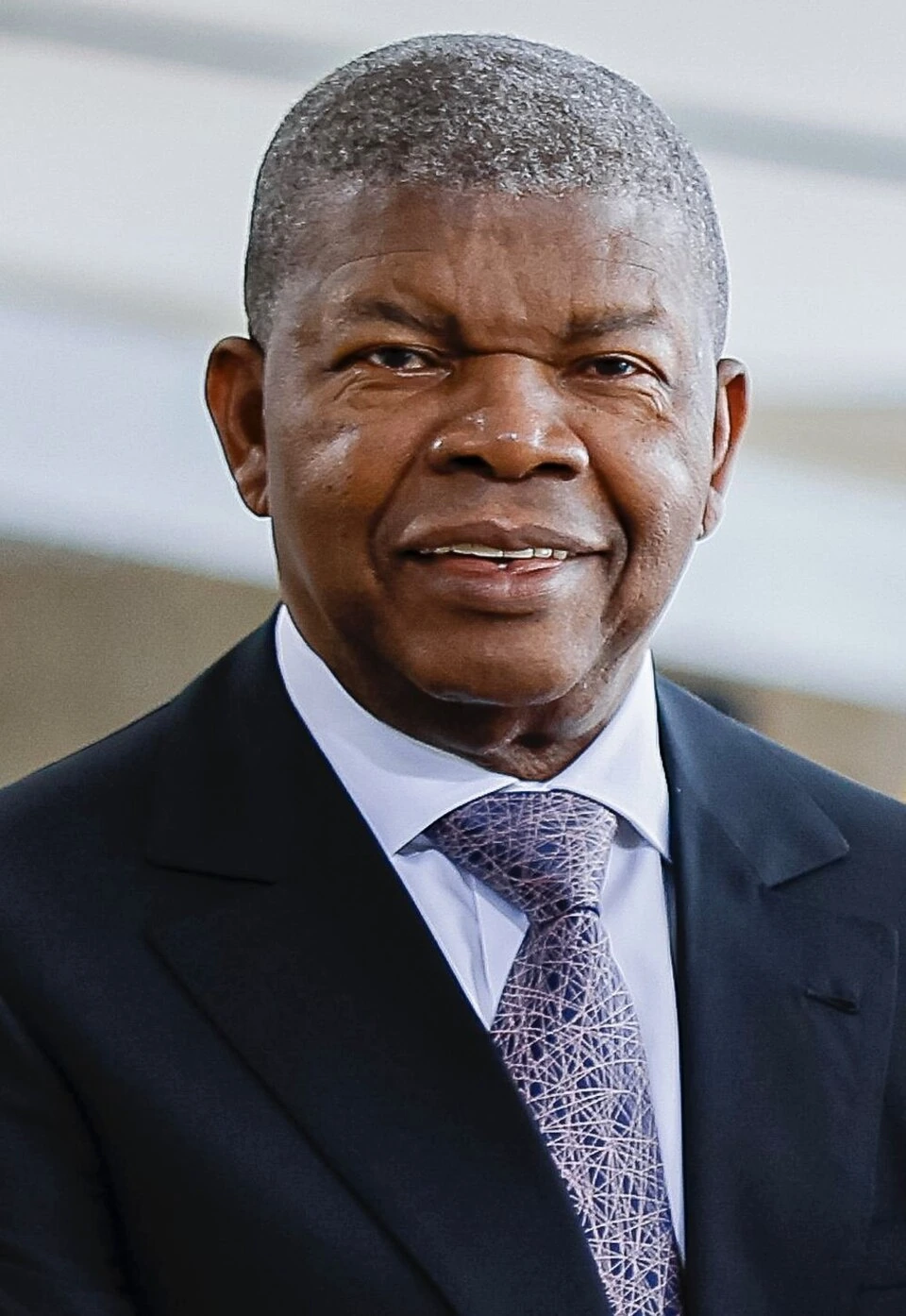
First, make sure you have the right João Lourenço
João Lourenço is a genuinely common name in the Portuguese-speaking world, so it is worth confirming identity before diving into net worth. The person most searched in this context is João Manuel Gonçalves Lourenço, born March 5, 1954, in Lobito, Angola. He is the current President of Angola, having been inaugurated on September 26, 2017, after José Eduardo dos Santos stepped down following decades in power. He was re-elected and sworn in again on September 15, 2022. He is also the President of the MPLA, Angola's ruling party.
If you are looking for someone else, this article is not the right place. Readers of this platform may also be interested in other Portuguese-speaking public figures such as João Fonseca, João Appolinário, João Cancelo, or María João Pires, all of whom have separate wealth profiles worth exploring. Readers who came here specifically for João Cancelo net worth should note that this article focuses on João Lourenço, and any comparison requires separate sourcing João Appolinário, João Cancelo.
João Appolinário net worth figures are often discussed in a similar way, using estimates rather than audited disclosures. If you're also looking into María João Pires net worth, her wealth profile is separate from João Lourenço's and needs its own sources. João Fonseca net worth queries are common, but his wealth details depend on reliable reporting and verifiable disclosures rather than guesswork. But the content below is exclusively about the Angolan head of state.
What 'net worth' actually means for a politician

Net worth for a politician is calculated the same way it is for anyone else: total assets minus total liabilities. The difference is that politicians rarely publish a personal balance sheet. For private-sector figures, you can often trace wealth through company ownership, stock filings, or reported deals. For a head of state, especially in a country like Angola where financial transparency is limited, researchers have to work with fragments: known salaries, reported real estate, disclosed assets where they exist, and career timelines.
Angola does have a legal framework requiring public officials to file asset declarations (declarações de bens) with the Attorney General's Office (Procuradoria-Geral da República, or PGR). João Lourenço reportedly made such a declaration when he assumed office in 2017. However, access to those declarations is not broadly public.
Gira Notícias (2024-06) reports that Angola's Procuradoria-Geral da República (PGR) updated a list of recovered assets since 2019, including assets located in Angola, Portugal, and Brazil PGR updated a list of recovered assets since 2019.
Legal experts cited by VOA Portuguese have noted that the declarations are not open to the general public, and that PGR access can depend on whether an investigation is underway. Several reporting outlets have described the declarations as effectively 'engavetadas' (shelved), meaning delays and incomplete compliance have been documented systemwide.
This means any net worth figure you see for João Lourenço on a tracking website is an estimate built from indirect evidence, not from a published, audited declaration. That does not make the estimate worthless. It just means you should read it with appropriate calibration.
The best available estimate: around $20 million
NetWorth Africa places João Lourenço's estimated net worth at $20 million USD as of 2024, with the page last updated in April 2026. That is the most specific figure available from a dedicated tracking source. No major investigative outlet has published a documented, sourced figure that directly contradicts or substantially revises this estimate upward or downward.
For context, $20 million is a plausible but relatively modest figure for a long-serving head of state in a resource-rich country. Angola is one of Africa's largest oil producers, and Carnegie Endowment research has documented that the country's post-independence era created a small, extremely wealthy elite closely connected to political power. Lourenço's own presidency has been marked by anti-corruption efforts and institutional reforms, including large-scale asset seizure and money laundering cases prosecuted by the PGR. Whether those reform credentials affect his personal wealth trajectory is impossible to confirm publicly, but it does establish the broader context for why independent wealth tracking of Angolan officials is both difficult and important.
Where the wealth likely comes from: asset breakdown

Based on his career timeline and the breakdown categories used by NetWorth Africa, here is a reasonable working model of where João Lourenço's estimated wealth comes from:
- Government salary and career earnings: Lourenço has held senior political and legislative roles since the early 1990s, including leading the MPLA's Parliamentary Group (1991–1998), chairing the National Assembly's Constitutional Commission, and serving in vice-presidential and ministerial roles before becoming president. Decades of senior government compensation accumulate meaningfully, even at Angolan public salary rates, especially when combined with allowances and benefits typical of executive-level office.
- Private family residence: NetWorth Africa's breakdown lists a private family residence as one of the primary asset components. In Luanda, executive-tier real estate carries significant value, especially properties acquired or improved over a long political career.
- Pension and retirement savings from military and political career: Lourenço has a military background that predates his political career, adding a second track of pension entitlements. Long-serving senior officials in Angola accumulate entitlements from both tracks.
- Cash and savings: The profile also accounts for liquid assets, though the specific amounts are not publicly documented and this component is the most difficult to independently verify.
It is worth noting what this breakdown does not include: business interests, investment portfolios, or holdings through corporate structures. Angola's political elite has historically held wealth through layered corporate arrangements, and it is not known whether Lourenço has any such structures. If he does, they are not captured in the public estimate, which would mean $20 million is a floor rather than a complete figure.
Why different websites show different numbers
If you search for João Lourenço's net worth across multiple sites, you will likely find different figures or no figure at all. If you are comparing claims about João Cor(en)el net worth, use the same approach: look for stated methodology, sourcing, and clear evidence behind any asset estimate. That variation is not necessarily a sign that one source is lying. It reflects genuine methodological differences and data gaps.
| Factor | What it means in practice |
|---|---|
| Disclosure availability | Angola's asset declaration system has limited public access. Sites working without document-level data must model income from career timelines. |
| Currency and year of estimate | A figure reported in 2018 USD is different from one reported in 2024 USD, especially given inflation and Angola's kwanza volatility. |
| Scope of assets included | Some sites include only verifiable assets; others model potential hidden wealth or business interests, inflating the number. |
| Update frequency | A site that has not refreshed its data since 2019 may be significantly out of date, especially given Angola's active anti-corruption enforcement activity. |
| Methodology transparency | Sites that list their breakdown (like NetWorth Africa does) are generally more reliable than those that publish a single number with no explanation. |
General-purpose celebrity net worth aggregators sometimes pull figures from each other, creating a loop where the same estimate circulates without independent verification. The most reliable approach is to find a source that explicitly states its methodology, discloses that the figure is an estimate, and provides a breakdown of asset categories. A site that presents a single round number as a hard fact, with no caveat or sourcing, should be treated with skepticism.
How to check and update the figure yourself today
If you want to verify or update this estimate as of June 2026, here are the most practical steps:
- Check Angola's Attorney General's Office (PGR) for any public announcements related to asset declarations or corruption cases that name sitting or former officials. The PGR has published updated lists of recovered and seized assets since 2019, covering assets located in Angola, Portugal, and Brazil. Any major enforcement action involving Lourenço's assets would appear here first.
- Search VOA Portuguese and major Angolan news outlets (like Jornal de Angola or Novo Jornal) for recent reporting on the asset declaration system. VOA has been actively covering whether declarations are being filed, whether access is improving, and whether the PGR is reforming its oversight model. A policy change could shift what is publicly visible.
- Review the official biography at Governo.gov.ao for career stage updates. Changes in official role can inform income modeling, especially if he were to leave office or assume a new position.
- Cross-check NetWorth Africa's João Lourenço profile directly, noting the 'last updated' date. If it has been updated more recently than your last visit, review whether the breakdown has changed.
- Look for Carnegie Endowment, Global Financial Integrity, or Transparency International reports on Angola's elite wealth and corruption enforcement. These institutional reports sometimes surface new asset data or investigations that feed into updated estimates.
- If you find a significantly different figure on another tracking site, compare the asset breakdown and update dates before accepting it. A number without a breakdown is almost always less reliable than one with itemized components and a stated methodology.
The bottom line on reliability
The $20 million estimate for João Lourenço is the best publicly available figure as of mid-2026. It is research-based, not rumor-based, and it comes with a transparent breakdown and an explicit disclaimer that it is approximate. Given Angola's limited financial transparency and the structural inaccessibility of official asset declarations, that is about as good as the evidence gets for now. Treat it as an informed estimate with a meaningful margin of uncertainty, watch for enforcement or disclosure events that could revise it, and approach any dramatically higher or lower figures you find elsewhere with healthy skepticism unless they come with sourcing you can trace.
FAQ
How can I confirm I am looking at the right João Lourenço when searching net worth?
Start by matching at least two identifiers, birth date (March 5, 1954) and political role (President of Angola, since 2017). Avoid results that omit biographical details, since the name João Lourenço is common and sites can mix individuals when they share Portuguese naming patterns.
Is the $20 million estimate a confirmed number or an audited figure?
It is an estimate, not an audited or declared balance sheet figure. Treat it as a model built from partial evidence, and look for the site to clearly state that it is approximate and to describe the categories used (for example, salary-linked earnings or disclosed real estate), otherwise you cannot tell what is assumed.
What is the single biggest reason net worth sites might differ for João Lourenço?
They may capture different asset channels. The article notes that corporate structures, business interests, and investment holdings may be missing in some models, so one site might effectively treat those as zero while another tries to infer them, leading to materially different totals.
Can I access Angola’s official asset declarations (declarações de bens) to verify the estimate?
Not reliably through public access, and even when declarations exist, availability can depend on ongoing legal or investigation conditions and internal access rules. As a result, verification through official documents may be incomplete, so net worth figures will remain indirect.
What practical steps can I take to cross-check an updated net worth number in 2026?
Look for three things on any site: (1) an explicit methodology section, (2) a breakdown by asset types, and (3) a timestamp of last update. Then compare whether the estimate changes track events like major asset seizure proceedings or new publicly disclosed properties, rather than accepting large jumps without evidence.
Why do some websites show round numbers with no disclaimers?
Those figures are often copied or generated without independent evidence, creating a loop across aggregators. If there is no statement that the figure is an estimate and no explanation of inputs, treat it as low-quality until you can trace the underlying source.
If a site claims a much higher or lower net worth than $20 million, how should I evaluate it?
Check whether it provides traceable sourcing and a category breakdown, or whether it relies on vague claims (such as “business empire” or “offshore holdings”) without documents. Without that, large differences are usually methodological guesswork, not new verifiable data.
Does anti-corruption or asset forfeiture in Angola affect João Lourenço’s personal net worth estimates?
It can affect the broader wealth landscape, but it does not automatically mean his personal net worth decreases in the public models. Unless there is specific, attributable evidence about his assets or ownership, net worth trackers typically cannot convert enforcement outcomes into a direct personal adjustment.
What common mistakes should I avoid when interpreting political leaders’ net worth?
Avoid assuming “no public disclosure” means “no wealth,” and avoid interpreting the estimate as a floor or ceiling without understanding its missing categories. Also, don’t mix wealth profiles of similarly named public figures, since Portuguese naming overlap can cause accidental cross-linking.
Next Articles
Maria João Pires Net Worth: Estimate, Methods, and Income Drivers
Estimate of Maria João Pires net worth with methods, income sources, uncertainty, and how to verify figures.

João Fonseca Net Worth Today: Estimate and Parents
João Fonseca net worth today estimate plus what’s known about his parents’ wealth, and how figures are calculated.
Bornito de Sousa Net Worth: 2026 Estimate and Breakdown
Estimativa atual (USD) do patrimônio de Bornito de Sousa em 2026: valor, origem e provas documentadas.