
As of April 17, 2026, a defensible estimated net worth range for João Fonseca sits between $2.5 million and $4 million USD. That range is grounded in publicly verified prize money, confirmed sponsorship relationships, and conservative estimates for costs and taxes. It is not a single precise number, because no single precise number is honestly knowable from public data alone. What follows explains exactly how that range was built, what drives it, and what to make of the recurring searches for his parents' or father's net worth.
João Fonseca Net Worth Today: Estimate and Parents

Rafael Pereira
17 Apr 2026
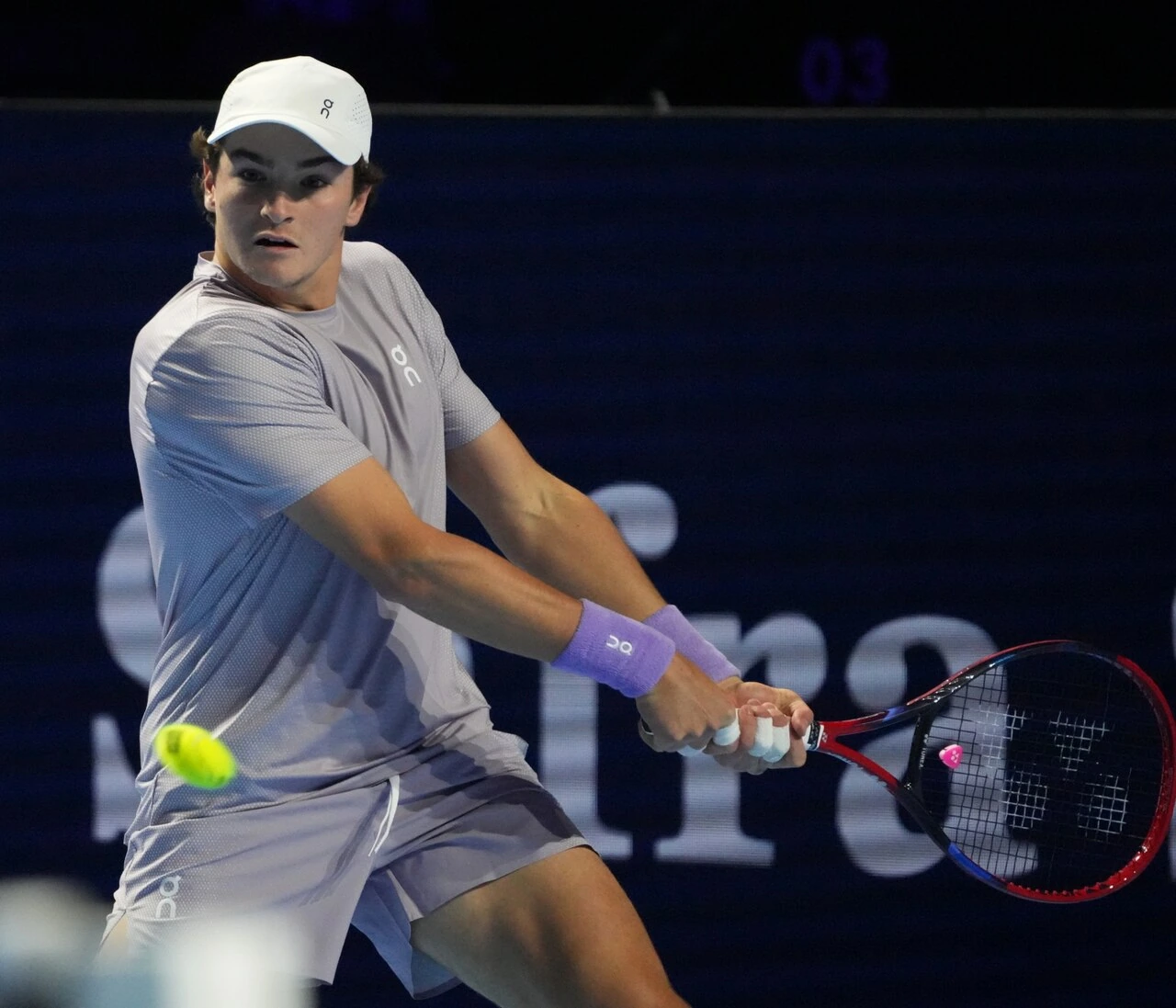
Who João Fonseca is and why people are searching his net worth

João Franca Guimarães Fonseca was born on August 21, 2006, in Rio de Janeiro, Brazil. He is 19 years old as of this writing and already one of the most talked-about young players in professional tennis. He went undefeated at the 2024 Next Gen ATP Finals in Jeddah, winning all five matches and walking away with a tournament-record $526,480 in prize money. In 2025, he won singles titles at the Argentina Open and the Swiss Indoors. In early 2026, he added a doubles title at the Rio Open. By April 10, 2026, after a strong Monte Carlo run, he crossed $3 million in career prize money.
That kind of accelerating trajectory creates a natural curiosity about his finances. He is a teenager from Brazil cracking the ATP top 30, earning in USD and BRL simultaneously, and signing with global brands. People want to know what that is actually worth. The search volume also spikes because of his family background: reports that his father Christiano is a financier connected to high-value asset management add a second layer of curiosity, which is why "João Fonseca father net worth" and "João Fonseca parents net worth" rank alongside his own name in search queries.
How net worth estimates actually get built
Before getting to the numbers, it is worth being transparent about methodology, because the internet is full of net worth figures that look authoritative but are not. For an athlete like Fonseca, the most reliable input is career prize money. In ATP’s 2026 Media Guide player bios, João Fonseca’s “Career Prize Money” figure is included as a reliable official reference point. ATP prize money is systematically published by tournament organizers, tracked across the season, and reported in detail by outlets like ge.globo and ATP Tour itself. That makes it the firmest foundation for any estimate.
On top of prize money, analysts typically add estimated endorsement income based on confirmed sponsorship relationships. The word "estimated" matters here: brand deals are rarely disclosed at a contract level, so reasonable assumptions are made based on deal tier, athlete profile, and industry benchmarks. Then, to move from gross income to net worth, you subtract realistic deductions: Brazilian and international tax obligations, agent and manager fees (typically 10 to 20 percent of earnings in tennis), training costs, travel, and living expenses. Any remaining capital that has been invested adds to net worth, but investment behavior is almost never public for athletes at this career stage.
The honest limitation is this: prize money is public, but how much of it a player actually keeps depends on decisions made in private. A site that quotes a single net worth figure without acknowledging that gap is not being transparent. This platform treats estimates as ranges with stated inputs, not as precise verdicts. That is the same standard applied to other Brazilian and Portuguese-speaking public figures tracked here, whether that is a musician, politician, or, as another example from this database, João Cancelo net worth, which faces similarly layered endorsement and salary complexities.
Breaking down João Fonseca's career income

Prize money: the verifiable anchor
Career prize money is the clearest number available. As of April 10, 2026, ge.globo reported Fonseca earned R$ 940,000 at Monte Carlo and crossed the $3 million USD mark in total career earnings. Earlier reporting from Tennis365 pegged the figure at approximately $2,968,665 just before that milestone. His 2025 season alone exceeded $1 million in prize money according to CNN Brasil, and ge.globo separately reported total 2025 earnings of R$9.4 million. The $526,480 from the 2024 Next Gen ATP Finals was a single-event record for that competition and a major early-career windfall.
The Rio Open 2026 also contributed meaningfully: ge.globo noted he earned close to R$580,000 from his doubles title and singles results during that event alone, bringing his total career prize money in Brazilian real terms to more than R$14.5 million. That figure, converted at prevailing exchange rates, tracks closely with the USD milestones reported separately.
Endorsements: confirmed brands and what they suggest

Two confirmed sponsorships carry the most weight here. First, Rolex: the brand publicly lists Fonseca as an ambassador, with the relationship beginning in 2024, and its status as official Rio Open sponsor for the 11th consecutive year reinforces that he is embedded in Rolex's long-term tennis portfolio. Second, Mercado Livre: Gazeta Esportiva reported Fonseca signed a 2026 sponsorship with the company, a major Latin American e-commerce platform. Forbes Brasil has also framed his commercial profile in relation to elite sports management, noting his inclusion on the Forbes Under 30 list.
Equipment sponsors like On (footwear) and Yonex (rackets) have also been referenced, though those deals tend to be lower in value than lifestyle or financial-brand partnerships. For a player ranked inside the ATP top 30, total annual endorsement income in the range of $500,000 to $1.5 million is a reasonable industry estimate, though nothing close to that has been officially confirmed. Treat the upper end as optimistic and the lower end as conservative.
João Fonseca's net worth estimate today: the defensible range
Here is how the estimate comes together as of April 17, 2026:
| Income Component | Estimated Amount (USD) | Confidence Level |
|---|---|---|
| Career prize money (to date) | $3,000,000+ | High (publicly reported) |
| Estimated net prize money after fees/tax (~50-60% retained) | $1,500,000 – $1,800,000 | Medium (assumptions on deductions) |
| Endorsements (Rolex, Mercado Livre, equipment) | $500,000 – $1,500,000 cumulative | Low-Medium (deals confirmed, values not public) |
| Investment / savings accumulation | Unknown | Low (not publicly disclosed) |
| Estimated net worth range | $2,500,000 – $4,000,000 | Defensible range |
The $2.5 million floor is grounded: even with conservative retention rates on prize money and modest endorsement assumptions, a player who has earned over $3 million gross in prize money before turning 20 would realistically hold at least that much in net assets. The $4 million ceiling reflects a more favorable scenario where endorsement income has been substantial, tax structuring has been efficient, and capital has been preserved or grown. Going higher than $4 million at this stage would require speculative assumptions not supported by available data.
Some net worth sites quote a flat $1 million figure, which appears to be an early-2025 estimate that was never updated after his prize money milestone run. That figure is now clearly outdated and should not be treated as current. The $3 million gross prize-money threshold alone makes the sub-$1 million figures unreliable.
Parents and family net worth: what's known and what isn't

Searches for João Fonseca's father's or parents' net worth are common, and it is worth addressing them directly rather than sidestepping the question. His father, Christiano Fonseca, has been publicly identified as a financier and co-founder and CEO of IP Capital Partners, a Brazilian asset management firm. Tennis365 reported the firm has managed assets up to approximately $1 billion. That is a credible business context, and it places Christiano Fonseca in a meaningful segment of Brazilian finance.
However, assets under management at a firm are not the same as personal net worth. Fund managers earn fees and may hold equity stakes in their firms, but no public financial statements, audited personal wealth disclosures, or verified interviews exist that would support a specific personal net worth figure for Christiano Fonseca. His mother, Roberta Fonseca, also keeps a low public profile, and no financial information is publicly available for her.
Any number circulating online claiming a specific net worth for João Fonseca's father is speculative and not backed by primary sources. In a Reddit discussion about Fonseca and Rolex, some users speculated about the scale of his father's wealth and described it using unverified claims.
This platform does not publish estimates without a defensible methodology, and for Christiano and Roberta Fonseca, the honest answer is: the family is clearly affluent by Brazilian standards based on professional context, but a specific figure cannot be responsibly stated.
This situation is not unusual. Many public figures with wealthy families present the same documentation gap. For comparison, consider how similar constraints apply when researching João Appolinário net worth, where business ownership context is clearer but personal wealth still requires careful separation from company valuation. The principle is consistent: business context informs the estimate, but does not replace actual financial disclosure.
What will move this number up (or down) going forward
Fonseca's net worth trajectory is unusually dynamic for someone his age, and several near-term factors will determine how quickly the range shifts upward. Being inside the ATP top 30 requires him to compete in at least 13 tournaments in 2026, per ge.globo reporting. That mandatory schedule means consistent prize money exposure at high-level events, some of which carry very large purses. Deeper runs at Grand Slams or ATP Masters 1000 events could add $500,000 to over $1 million in a single result.
Sponsorship growth is the other major lever. At 19, Fonseca is at the beginning of his commercial lifecycle. If his results continue to improve, expect brand deals to increase significantly in both number and value. The Mercado Livre partnership for 2026 signals that major Latin American corporations are already seeing commercial value in his profile. He mentioned he would likely play fewer doubles events going forward, which trades one source of prize money for better preparation for higher-value singles tournaments. That is a rational tradeoff financially.
Downside risks exist too. Injury, a ranking drop, or sponsorship non-renewals could flatten or reduce the trajectory. Tennis earnings are performance-dependent in a way that salaries are not. This is part of why it is worth comparing his situation to established Portuguese-speaking athletes at different career stages, such as the financial arc described in João Coronel net worth or the longer-term wealth accumulation pattern seen in figures like João Lourenço net worth, where stability and institutional position drive estimates more than performance cycles.
How to verify this and know when to update it
If you want to track Fonseca's prize money yourself, the ATP Tour website and the ITF's official results database publish tournament earnings in real time. Ge.globo and CNN Brasil regularly translate prize money into BRL, which is useful for Brazilian readers tracking real-terms wealth. For endorsement updates, follow official brand announcements directly (Rolex's ambassador pages, Mercado Livre press releases) rather than relying on secondary sports sites.
An estimate like the one above should be revisited whenever one of the following happens: he wins a major or reaches a Grand Slam final (prize money jump of $1 million or more), a new significant sponsorship is publicly announced, or a major career disruption occurs. Annual updates at the end of the ATP season are also a reasonable cadence, since that is when full-year prize money totals are confirmed.
For context on how net worth figures are built and maintained for figures from the broader Portuguese-speaking world, it also helps to look at how the methodology applies across different types of public figures. A classical musician like Maria João Pires net worth involves entirely different income inputs (performance fees, recordings, teaching, cultural grants) compared to a tennis player's prize money and sponsorship model, yet the underlying principle is the same: start from verifiable income, apply reasonable assumptions for costs and deductions, and acknowledge the limits of what is public.
The bottom line: João Fonseca's net worth as of April 17, 2026, falls in the $2.5 million to $4 million range based on over $3 million in documented career prize money and confirmed sponsorships from Rolex and Mercado Livre, net of estimated costs and taxes. His parents' wealth is contextually clear (his father runs a major Brazilian asset management firm) but not specifically quantifiable from public data. Any site that gives you a precise single number for either, without caveats, is not being straight with you.
FAQ
Why can João Fonseca’s net worth estimate change month to month?
Yes, the range can move quickly because Fonseca’s income is event-driven. A single deep Grand Slam run can add roughly $500,000 to $1,000,000+ in prize money, which often matters more than a moderate change in endorsements. If you are updating the estimate, recheck the latest match results first, then re-evaluate sponsorship changes second.
Can I calculate João Fonseca’s net worth from monthly income claims I see online?
You should treat any “monthly income” claim as unreliable unless it cites specific disclosed contracts. For tennis players, prize money arrives per tournament, while endorsements are usually paid on schedules that are not publicly detailed. A credible estimate therefore tracks cumulative earnings, not cash flow by month.
Does João Fonseca keep 100% of his ATP prize money?
No, ATP career prize money is gross earnings, not what he personally keeps. Agents and managers typically take a percentage, taxes apply across jurisdictions, and ongoing costs include travel, coaching, training, and equipment. That is why the article uses a range and subtracts realistic expenses rather than assuming he kept most of the prize money.
Why do some sites show a much lower or higher João Fonseca net worth than expected?
The most common mistake is using an old single-number figure that never gets updated after big results. If the cited number predates his career-prize-money milestones, it will likely understate (or occasionally overstate) the current value. Use estimates tied to a date and backed by updated cumulative prize money.
How do investments and spending affect the estimate if they are not public?
Because he is still early in his career, reported capital returns and personal investment behavior are mostly unknown. If he has reinvested earnings, net worth could rise faster than prize money alone would suggest. If he has high spending needs, net worth could rise more slowly. That uncertainty is a key reason the estimate is not a single fixed number.
What does “net worth” mean for tennis players, and why do numbers get mixed up?
For Fonseca, “net worth” figures usually mix different financial concepts, such as prize money, endorsement revenue, and sometimes company valuation talk. Your safest method is to stick to documented career prize money plus conservative endorsement assumptions, then apply deductions. Do not combine his father’s business asset-management context with a personal wealth figure without evidence.
Why is it hard to find a precise net worth for João Fonseca’s father?
Searches about Christiano Fonseca’s wealth often confuse assets under management with personal net worth. Even if a firm manages up to about $1 billion in assets, that does not translate to Christiano’s personal wealth because fund managers earn fees and may own some equity, but personal holdings are not publicly audited. So it is not responsible to restate an exact personal net worth number without primary disclosures.
What should I watch for to predict whether the net worth range will go up?
In practice, the net-worth number is sensitive to endorsement assumptions, not just on/off sponsorships. A deal can be significant even if it is not fully disclosed, and renewals can change annually. If an additional major sponsor is announced, the estimate should be revised upward more than a small new prize-money result would.
What events would most likely slow down João Fonseca’s net worth growth?
If he gets injured, loses ranking points, or sponsorships are not renewed, the range can flatten. Because his earnings are performance-dependent, a short downturn can reduce future prize money exposure more than you would expect from a stable-salary job. If you want to monitor downside, track ranking changes and tournament participation.
How often should I update the João Fonseca net worth estimate?
At the end of the ATP season is a good cadence because full-year totals are easier to validate and compare. Additionally, do a mid-year review after a major or after a cluster of high-purse tournaments where deep runs are plausible. That gives you meaningful updates without overreacting to one-off smaller results.
Next Articles
Bornito de Sousa Net Worth: 2026 Estimate and Breakdown
Estimativa atual (USD) do patrimônio de Bornito de Sousa em 2026: valor, origem e provas documentadas.
Joao Sousa Net Worth: Estimate, Breakdown, and How to Verify
Estimate of João Sousa net worth with identity checks, earnings breakdown, calculation methods, and tips to verify confl

Osmel Sousa net worth: estimativa e como verificar
Estimativa do patrimônio do Osmel Sousa com fontes, faixas de valor e passos para verificar e entender divergências onli