
Maria João Pires, the Portuguese classical pianist born in Lisbon in 1944, has an estimated net worth in the range of $5 million to $10 million USD as of May 2026. That range reflects decades of elite concert fees, a large recorded catalog split between Erato and Deutsche Grammophon, teaching residencies, and project-based income from her Centre de Belgais arts initiative. Because no verified personal financial disclosure exists, this is an informed estimate built from career evidence, not an audited balance sheet.
Maria João Pires Net Worth: Estimate, Methods, and Income Drivers

Rafael Pereira
16 May 2026
Who exactly is Maria João Pires?

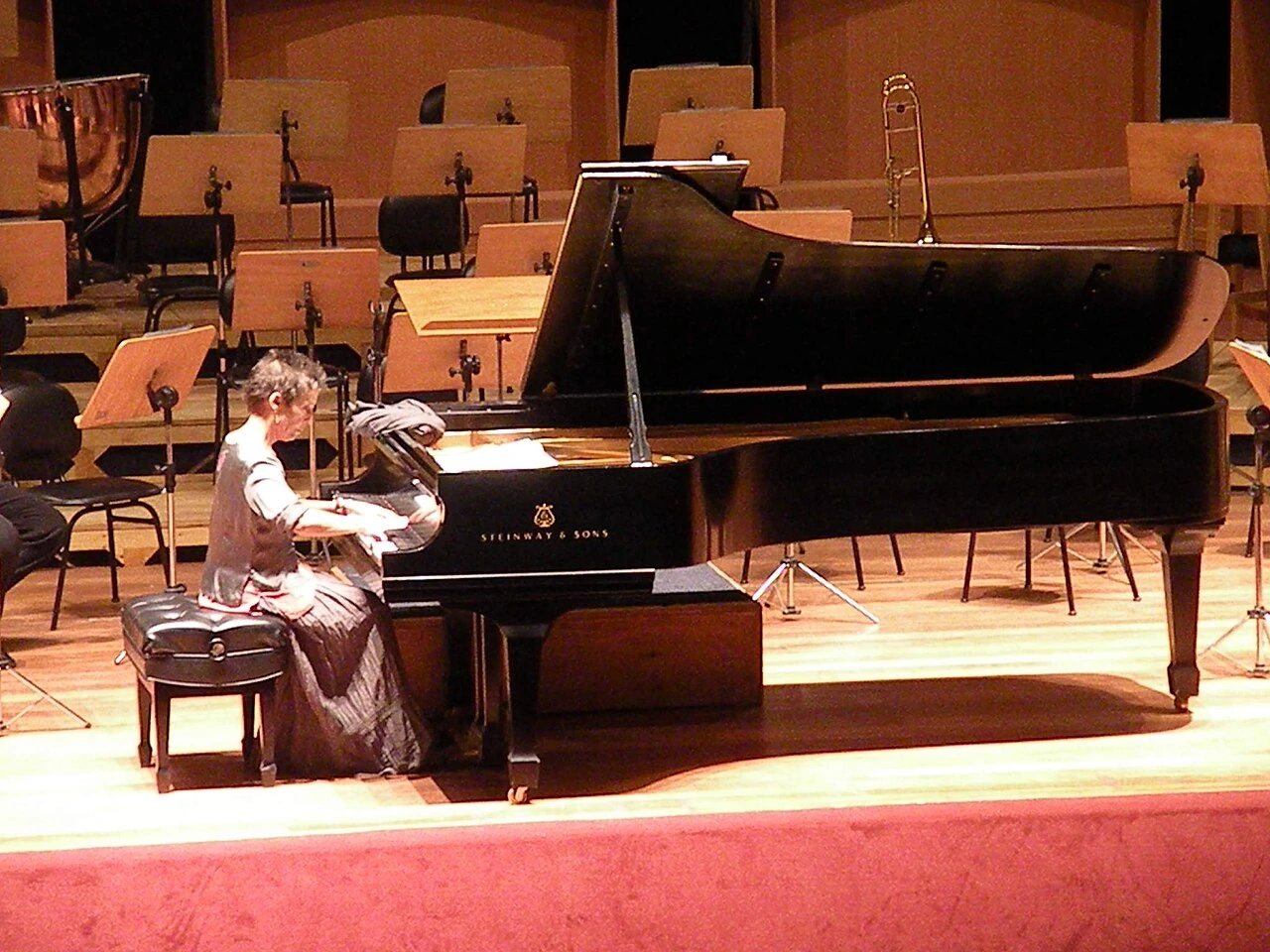
It is worth being precise here, because name-conflation is a real issue in net-worth research. The Maria João Pires discussed on this page is the classical pianist born on 23 July 1944 in Lisbon, Portugal. She studied at the Lisbon Conservatory under Campos Coelho and later in Germany with Rosl Schmid and Karl Engel. She is internationally recognised for her interpretations of Mozart, Schubert, and Chopin, holds long-term recording relationships with both Erato (approximately 15 years) and Deutsche Grammophon (approximately 20 years), and was a Master in Residence at the Queen Elisabeth Music Chapel in Waterloo, Belgium, from 2012 to 2016. She also founded the Centre de Belgais near Castelo Branco in 1999, an arts education project that became a significant part of her public profile.
Other individuals share her name in Portuguese public records, including at least one engineer or academic indexed in the Ciênciavitae database. If you are searching net-worth databases and see conflicting figures, double-check that the profile specifies the pianist born in 1944 and lists her label affiliations or teaching roles. If you are searching net-worth databases and see conflicting figures, double-check that the profile specifies the pianist born in 1944 and lists her label affiliations or teaching roles, or compare with joão lourenço net worth figures for another example of how uncertainty shows up online. Anything else is a different person entirely.
How net worth estimates for classical musicians actually get made
Sites like CelebrityNetWorth and NetWorthSpot are upfront that their figures come from publicly available information fed through a proprietary algorithm, not from verified financial statements. Forbes uses a more conservative methodology for its wealth lists, framing figures as 'at least' amounts rather than exact totals. None of these sources can access private bank accounts, undisclosed property holdings, or personal liabilities.
For a classical musician, the practical methodology works like this: researchers estimate career income by looking at the tier and volume of concert engagements, then add estimated recording royalties based on label tenure and catalog activity, then factor in teaching and institutional roles, and finally adjust downward for plausible costs and liabilities. The result is an interval, not a point. The wider the career, the more defensible the estimate, but it is still an estimate. For Maria João Pires, the career evidence is unusually rich by classical music standards, which narrows the uncertainty somewhat.
The estimated net worth range, with timeline context

The most defensible current estimate (as of May 2026) places Maria João Pires' net worth between $5 million and $10 million USD. The lower end reflects a conservative reading: career earnings reduced by costs of running the Centre de Belgais, the documented public-funding controversy around a 65,000-euro subsidy in 2003, periods of reduced touring, and the general reality that classical performers do not accumulate wealth at the scale of pop artists. The upper end reflects the genuine breadth of her catalog (Deutsche Grammophon released a 'Complete Recordings' box set in 2020, which signals ongoing commercial value), the prestige tier of her engagements, and the Praemium Imperiale laureate status she received in 2024, one of the most significant arts prizes globally.
Historically, her peak active earning years were roughly from the late 1980s through the 2010s. The Deutsche Grammophon relationship that began in 1989 coincided with major international touring. The 2012 to 2016 residency at the Queen Elisabeth Music Chapel added institutional income. The 2024 Praemium Imperiale represents both recognition and likely a significant prize component. Her 2021 Internationaler Beethovenpreis came with a documented prize value of €10,000, which illustrates that individual prizes contribute real but modest sums compared to career earnings.
Breaking down where the money comes from
Concert and recital fees

Concert fees are the primary income driver for any active classical soloist of her stature. In a public interview, Pires herself stated she 'does concerts for money,' which confirms what is obvious from her schedule: high-tier solo recitals and orchestral appearances are paid engagements. Elite soloists performing at venues like the Elbphilharmonie or major festivals typically command fees in the range of tens of thousands of euros per engagement, and her documented appearances with the Lucerne Festival Orchestra and involvement with the Partitura Project place her firmly in that tier. Over a career spanning more than five decades, accumulated concert income alone could plausibly account for the majority of her estimated net worth.
Recording royalties and catalog licensing
Fifteen years with Erato followed by roughly twenty years with Deutsche Grammophon adds up to a large catalog. Warner Classics maintains her Erato-era recordings; Deutsche Grammophon released a 'Complete Recordings' compilation as recently as September 2020. That kind of reissue activity generates ongoing royalties and licensing income even when an artist is not actively recording. The scale is modest compared to pop music royalties, but for a classical catalog of this depth, long-tail income over decades accumulates meaningfully.
Teaching, residencies, and masterclasses
The Master in Residence role at the Queen Elisabeth Music Chapel (2012 to 2016) was a salaried institutional position. Elite residencies at institutions of this calibre typically come with housing or living allowances in addition to fees. Masterclasses at major conservatories and festivals also generate per-session fees that, across a career, are not trivial. Teaching income at this level is not disclosed publicly, but it is a real and consistent revenue stream.
Centre de Belgais and project-based income
The Centre de Belgais, founded in 1999, is an arts education initiative rather than a commercial enterprise, and its financial flows are complex. Public funding controversies documented by RTP/Lusa, including blank" rel="noopener noreferrer">a 65,000-euro subsidy dispute from 2003, show that the centre received public grants and that administering those grants created friction. Depending on how the centre is structured, Pires may receive governance or directorial compensation, or she may operate it at personal cost. It is not reliable to count Belgais as a net positive to her personal wealth without clearer structural information.
Prizes and awards
The Pessoa Prize (1989) is one of Portugal's most prestigious cultural awards and comes with a monetary component. The 2024 Praemium Imperiale is among the largest arts prizes in the world, typically carrying a prize value in the millions of yen (historically around 15 million yen, roughly equivalent to $100,000 USD or more depending on exchange rates). The 2021 Beethoven prize contributed €10,000. Awards are real but episodic income.
What we can verify vs what we genuinely cannot know
| What is verifiable | What is not verifiable |
|---|---|
| Label affiliations: Erato (~15 years) and Deutsche Grammophon (~20 years) | Exact royalty rates or total royalty income |
| Elite-tier concert appearances at major venues and festivals | Specific fee amounts per engagement |
| Master in Residence at Queen Elisabeth Music Chapel, 2012–2016 | Exact salary or compensation for the residency |
| Praemium Imperiale laureate, 2024 | Full prize value converted at current exchange rates |
| Centre de Belgais public subsidy of €65,000 documented in 2003 | Current financial structure or her personal compensation from Belgais |
| Honorary doctorate from University Pompeu Fabra | Personal real estate holdings or investment portfolio |
| Documented decision to live in Brazil at a point in her career | Current country of residence and tax jurisdiction |
The asset side of her net worth is particularly opaque. There is no public record of real estate holdings, investment accounts, or other documented assets beyond what her career profile implies. Her decision at one point to live in Brazil, documented in connection with the Belgais funding controversy, raises questions about asset location and tax jurisdiction that are impossible to resolve without private disclosure. This is why the estimate is a range, not a figure.
How she compares within Portuguese classical music
Within the world of Portuguese classical music, Maria João Pires is the most internationally prominent instrumentalist of her generation, which means her earning potential has consistently exceeded that of peers who remained primarily within Portugal. Portuguese classical musicians working domestically face a much smaller fee market and limited recording infrastructure. Pires's decades-long relationship with Deutsche Grammophon, her presence at venues like the Elbphilharmonie, and her Praemium Imperiale are not typical of Portuguese classical careers. Her estimated net worth range of $5 million to $10 million is therefore at the high end for Portuguese classical artists, though it remains far below the accumulated wealth of major pop or sports figures from the same country.
For context, other Portuguese and Portuguese-speaking public figures tracked on this platform span very different wealth tiers: athletes like João Cancelo operate in a commercial sports economy where endorsement deals and transfer fees dwarf classical music income, while figures like João Fonseca are at the early stages of career accumulation. Pires represents a different wealth profile entirely, one built over six decades through artistry and institutional reputation rather than commercial sponsorship.
Why the number changes and how to track updates
Net worth estimates change for several reasons, and understanding them helps you interpret any figure you find online. First, new engagements add income: the 2024 Praemium Imperiale laureate status will have updated estimates across major databases. Second, royalty income is not static: reissues, streaming adoption of classical catalogs, and licensing deals fluctuate year to year. Third, exchange rates matter more than people realise: if significant assets or income are held in euros or Brazilian reais rather than US dollars, a shift in currency values changes the dollar-denominated estimate without any actual change in underlying wealth. Fourth, life changes like reduced touring, or the resolution of the Belgais project in one direction or another, shift the income picture.
If you want to cross-check any estimate you see published, the most useful steps are straightforward. Look at whether the source explains its methodology at all. If it claims an exact figure without any source or method disclosure, treat it as a guess. Compare figures across multiple sites and note the range: a wide spread between sources reflects genuine uncertainty, not one source being more accurate than another. For primary verification of career income proxies, Deutsche Grammophon's artist discography page, Warner Classics' artist profile, and coverage of her Praemium Imperiale award are the most useful public anchors. For prize amounts, official award body pages carry more weight than aggregator sites. Nothing you find publicly will resolve her personal balance sheet, but those sources will help you sense-check whether an estimate is grounded in her actual career profile or not.
The bottom line is that Maria João Pires is one of the most accomplished classical pianists in European history, and her net worth reflects a long, internationally active career with genuine commercial depth. If you are looking for joão appolinário net worth specifically, make sure the claim you see matches the right person and provides a credible source. The $5 million to $10 million range is the most defensible estimate given available evidence as of May 2026, with meaningful uncertainty on both sides. Any site claiming a precise single number should be read as an estimate within that range, not as a verified figure. You may also see separate estimates for João Cancelo net worth, but that relates to a different person and is not part of Maria João Pires' verified career-based numbers.
FAQ
Why do some websites list a single exact net worth number for Maria João Pires, even though you say the evidence supports a range?
Most single-number listings are produced by proprietary models that convert partial public signals (career milestones, discography volume, fame proxies) into a point estimate. Without audited disclosures, those numbers should be treated as guesses, especially if the site does not explain inputs and methodology or does not show an uncertainty band.
Is the $5 million to $10 million estimate meant to include income from the Centre de Belgais?
It may partly reflect the public visibility and institutional role around Belgais, but it should not be assumed that the centre is net-profitable to her personally. Depending on how the centre is structured, any compensation could be governance-based, salary-based, or offset by operating costs, so the personal wealth linkage is uncertain.
How can I tell whether a net worth result is for the right Maria João Pires (or a name mix-up)?
Check non-fame identifiers that are hard to copy: the pianist’s birth date (23 July 1944), Portuguese and German training background, and especially the recording label history (Erato and Deutsche Grammophon) plus the Queen Elisabeth Music Chapel residency (2012 to 2016). If those anchors do not match, it is likely a different person.
Do classical pianists like her usually earn more from concerts or from recordings later in life?
For an established artist with a deep catalog, recordings and licensing often become meaningful “long tail” income through reissues, compilations, and streaming-related royalty structures. However, for someone active across decades, concert fees usually dominate during peak touring years, while catalog monetization tends to smooth income afterward.
Do prizes like the Praemium Imperiale and Pessoa Prize materially change net worth estimates?
They can shift estimates a bit, but they are usually episodic relative to decades of fees and royalties. The Praemium Imperiale amount is significant but still typically smaller than the cumulative impact of high-tier concert engagements over many years, so it is more of an adjustment than a driver.
Could exchange rates and currency holdings make the same person’s net worth estimate look higher one year and lower another?
Yes. If a meaningful portion of assets or income is held in euros or other currencies, dollar-denominated estimates can move when exchange rates change. That can widen or narrow the apparent net worth range without a real change in underlying wealth.
If she lived in Brazil at some point related to the Belgais controversy, does that affect how researchers estimate her net worth?
It complicates it. Researchers cannot verify where specific assets are held or which tax jurisdiction applies. A move can change the tax cost structure and the location of earnings or investments, which affects how confidently you can infer disposable wealth from career income alone.
How do analysts account for costs, like running a foundation or maintaining a concert career, when estimating net worth?
They generally apply downward adjustments for plausible expenditures, such as management and agent fees, travel and staging costs, taxes, and program or project operating expenses. For an arts initiative, the cost structure can be especially hard to pin down, which is why personal wealth attribution to Belgais is treated cautiously.
What is the most reliable way to sanity-check a net worth figure you see online for her?
Look for transparent methodology, then cross-check career anchors rather than the final dollar amount. Verifying Deutsche Grammophon and Warner Classics catalog activity, documented residencies, and official prize announcements helps confirm the profile being modeled. If those anchors do not align, the wealth number is likely not anchored in her real career data.
Do streaming and reissues materially change net worth for older classical artists?
They can, but the effect is gradual and uneven. Reissues and compilation releases can restart royalty flows, while streaming may alter royalty rates compared with older physical sales. The impact depends on catalog depth, label deals, and how long the recordings remain in active distribution.
Why might her estimated upper bound be higher than peers, even within Portuguese classical music?
Her international prominence increases access to higher-tier concert markets and larger, more globally monetized recording catalogs. Local-only careers usually have smaller fee ceilings and less recording infrastructure, so even with comparable training, the long-term monetization pathway tends to be narrower.
If I want to estimate her net worth myself, what inputs would be reasonable to start with?
Start with documented engagement frequency and tier (solo recitals and major orchestral appearances), then estimate recording royalties using label tenure and catalog size, add institutional and teaching revenue only if it is directly supported by credible role descriptions, and finally apply a cost haircut for taxes, management, and project expenses. Even with good inputs, you should still expect a range, not a precise number.
Next Articles

João Fonseca Net Worth Today: Estimate and Parents
João Fonseca net worth today estimate plus what’s known about his parents’ wealth, and how figures are calculated.

Bornito de Sousa Net Worth: 2026 Estimate and Breakdown
Estimativa atual (USD) do patrimônio de Bornito de Sousa em 2026: valor, origem e provas documentadas.

Joao Sousa Net Worth: Estimate, Breakdown, and How to Verify
Estimate of João Sousa net worth with identity checks, earnings breakdown, calculation methods, and tips to verify confl