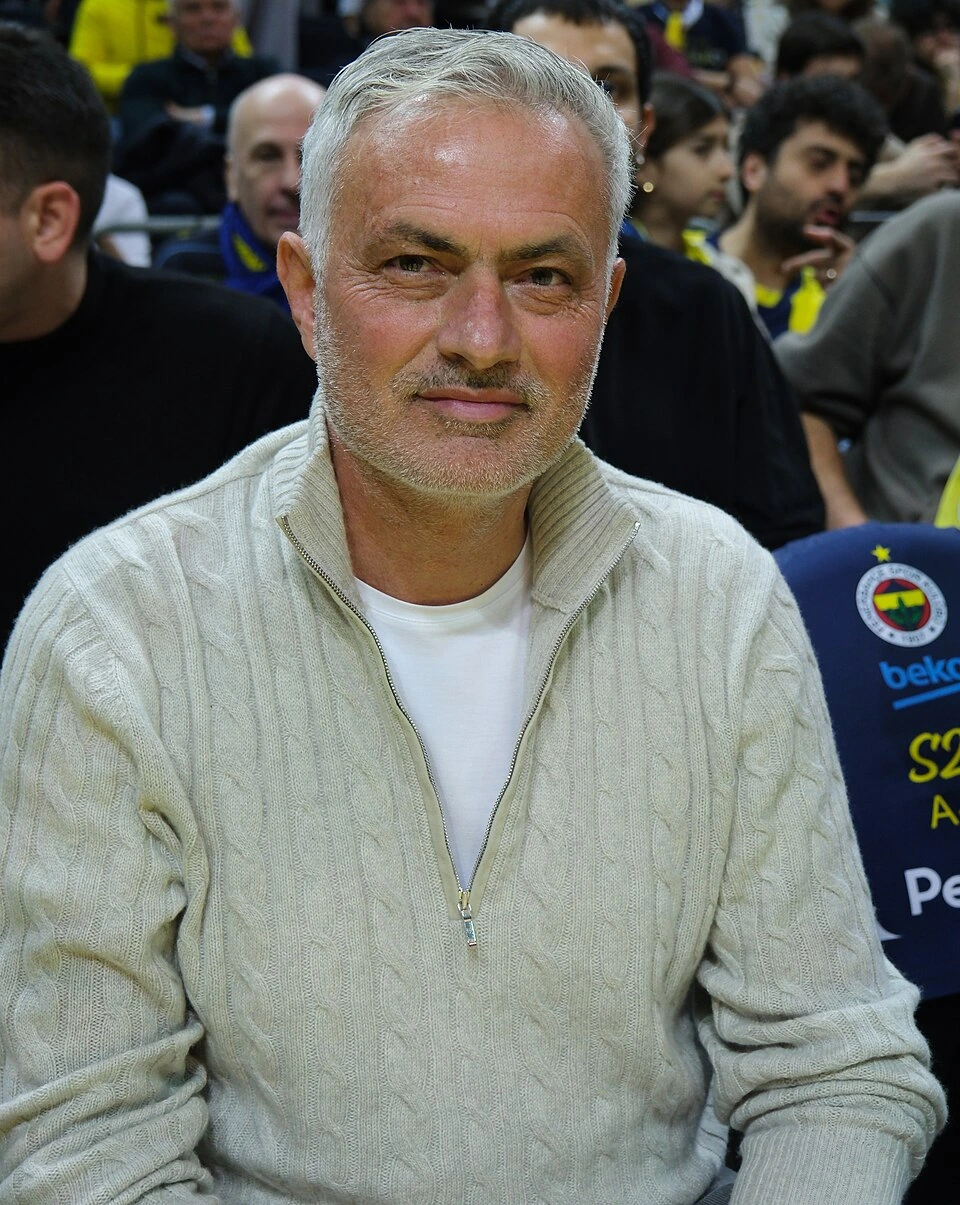
Which Mourinho are we talking about?

When people search "Mourinho net worth," they almost always mean Jose Mario dos Santos Mourinho Félix, the Portuguese football manager born in Setúbal in 1963. He is by far the most globally recognized person with that surname in football. That said, there is some search confusion worth clearing up. João Moutinho (spelled differently but phonetically similar in casual search) is a decorated Portuguese midfielder with his own wealth profile, you can find a separate breakdown of João Moutinho's net worth if that is who you were looking for. Similarly, Brazilian social media personality Teddy Moutinho sometimes surfaces in Mourinho-adjacent searches. This article covers Jose Mourinho, the manager, exclusively.
There is also occasional confusion about whether searches for "Mourinho" relate to his brand value (sometimes discussed in marketing contexts) versus his personal wealth. This article covers personal net worth, the accumulated wealth Jose Mourinho himself controls, not club valuations or abstract brand equity scores.
How net worth estimates are built
Net worth estimation for someone like Mourinho is not a single calculation, it is an aggregation of documented income streams, cross-referenced against known expenditures, tax obligations, and asset values. For a football manager, the primary inputs are coaching salaries (annually reported or leaked), performance bonuses and title bonuses (often clause-based and rarely public), severance payouts (frequently confirmed when clubs announce sackings), endorsement and image-rights income, media and speaking fees, and investment or property holdings. On the liability side, you factor in income tax by jurisdiction, known legal disputes, and general lifestyle costs.
The honest limitation is that most of this relies on secondary reporting rather than primary documents. Contract details are sometimes confirmed by clubs or journalists, but bonus clauses and personal investment returns almost never are. What makes Mourinho's case more traceable than most is that he has been sacked multiple times by major clubs, and each sacking triggers a disclosed or reported severance figure. Those confirmed payouts serve as hard anchors for any net worth estimate. Currency note: this article quotes figures primarily in USD and EUR. For Brazilian readers, a rough rule of thumb as of early 2026 is that $1 USD equals approximately R$5 to R$5.50 BRL, meaning Mourinho's estimated $120 million net worth translates to roughly R$600 to R$660 million.
Where the money actually comes from
Coaching salaries across elite clubs

Mourinho's salary history reads like a tour of European football's biggest payrolls. His earliest significant coaching role at Porto paid around €650,000 per year, a solid number in the early 2000s but modest compared to what followed. By 2014, Forbes was listing him as earning $17 million per year during his second stint at Chelsea, which placed him among the top-paid managers in world football at that time. At Manchester United, reported figures ran to approximately $27 million per year. At Tottenham, Forbes framed his earnings package at around $19.3 million annually. Roma paid him roughly £6 million per season (per The National's reporting on Europe's highest-paid managers), and at Fenerbahçe, blank" rel="noopener noreferrer">ESPN confirmed a salary of €10.5 million (approximately $11.4 million) per year on a two-year contract, with Front Office Sports' 2026 list corroborating a figure of $11.9 million for that role.
His current position at Benfica, confirmed by The Guardian on a deal running until summer 2027 (with a break clause at the end of this season), reportedly carries a package of around €11. The Guardian reported Mourinho was confirmed as Benfica head coach on a contract running until the summer of 2027, with a break clause at the end of the season The Guardian confirmed the Benfica deal until summer 2027 with a break clause. 5 million gross per season including bonuses, according to SalaryLeaks, though that outlet should be treated as an estimate rather than a verified figure. Even at a more conservative €6 million net, the Benfica role keeps Mourinho among the highest-earning managers in Europe.
Severance payouts: the defining windfall of his career
Arguably the most distinctive feature of Mourinho's financial story is his record of severance payments. Spanish outlet AS compiled a breakdown that totals 108.1 million euros in reported indemnities across his career: Chelsea twice (€20.9 million and €9.6 million), Real Madrid (€19.7 million), Manchester United (€22 million), Tottenham (€17.4 million), and Roma (€3.5 million). Add to that the approximately $15 million compensation Mundo Deportivo reported he was set to receive following his dismissal from Fenerbahçe, and severance alone accounts for a sum that would make most people wealthy for life, before a single salary payment is counted. These figures are not all officially confirmed to the cent, but the general scale has been reported by multiple credible outlets and is consistent with his known contract structures.
Endorsements, image rights, and brand partnerships

Mourinho has maintained a commercial presence well beyond his coaching roles. Motor1 reported that he signed on as an Audi brand ambassador, a partnership that reflects both his status and the kind of premium-brand alignment that typically commands six or seven figures annually. He also partnered with Football.com as a global brand ambassador, announced in August 2023 according to SponsorsGo, though specific fee terms were not disclosed. On the image-rights side, his commercial profile is so established that even after his sacking from Chelsea, ESPN reported the club retained rights to use his name on branded merchandise, which illustrates how deeply embedded image-rights monetization becomes at the elite level.
Mourinho is also represented by CAA Speakers as a paid speaker and media personality, where he is listed as an ambassador supporting the UN World Food Programme Against Hunger. Professional speaker fees for someone at his profile level typically range from $50,000 to $200,000 per engagement, though no specific fee is published. Across a year with several appearances, this is a meaningful but not dominant income stream.
Between club roles, Mourinho has worked as a pundit and studio analyst for major broadcasters. This kind of media work does not approach his managerial salary levels, but it keeps his public profile active and generates income during gaps between contracts. Exact figures for his punditry contracts are not public, but top-tier managerial names in European studio coverage can command €1 to €3 million per season. It is a supplementary income stream that adds to the overall picture without dramatically moving the needle on net worth.
How his wealth has built up over time
| Period | Club / Role | Approx. Annual Salary | Notable Financial Event |
|---|
| Early 2000s | Porto | €650,000 | Champions League win (2004); low base, high prestige |
| 2004–2007 | Chelsea (1st stint) | ~€5–8 million est. | Severance: ~€20.9 million |
| 2008–2010 | Inter Milan | ~€7–9 million est. | Champions League, Treble winner |
| 2010–2013 | Real Madrid | ~€12–15 million est. | Severance: ~€19.7 million |
| 2013–2015 | Chelsea (2nd stint) | ~$17 million | Severance: ~€9.6 million |
| 2016–2018 | Manchester United | ~$27 million | Severance: ~€22 million |
| 2019–2021 | Tottenham Hotspur | ~$19.3 million | Severance: ~€17.4 million |
| 2021–2024 | AS Roma | ~£6 million | Severance: ~€3.5 million |
| 2024 | Fenerbahçe | €10.5 million | Severance: ~$15 million (reported) |
| 2025–2027 | Benfica | €6–11.5 million (est.) | Ongoing; break clause end of season |
The pattern is clear: each major club role added both salary income and, in most cases, a severance payout that exceeded what most managers earn in an entire career. The Manchester United and Tottenham periods in particular were financially extraordinary, and the cumulative severance total of over €100 million across clubs is a figure that has no real parallel in football management history. Even if you apply aggressive tax assumptions across multiple jurisdictions (the UK, Spain, Italy, Portugal, and Turkey all have different tax treaties and rates), a substantial portion of that sum translates into personal wealth.
Why estimates differ and how to verify
You will find Mourinho's net worth quoted anywhere from $80 million to $150 million depending on the source and the year of publication. The variation comes from several genuine uncertainties. First, tax treatment: a €22 million severance from Manchester United is not €22 million in the pocket. UK income tax on high earners, combined with potential negotiated structures (lump sum vs. installments, personal service companies, image-rights splits), means the effective take-home varies considerably. Second, investment performance is unknown. If Mourinho has put significant capital into property in Portugal or other assets, those can appreciate or depreciate. Third, lifestyle costs and legal expenses, he has faced reported legal challenges in Spain related to tax authorities, can reduce the net figure meaningfully. Fourth, timing: an estimate published in 2022 will not reflect Fenerbahçe earnings or the subsequent severance.
For verification, the most useful approach is to cross-reference salary figures from primary sports journalism (ESPN, The Guardian, AS, Mundo Deportivo) against aggregator estimates (CelebrityNetWorth, PlanetFootball). When multiple independent outlets report similar figures for a given contract, that is the most reliable anchor. Be more skeptical of exact bonus figures or investment returns, as those are almost never sourced from primary documents. If you come across a figure significantly above £120 million or below $80 million without specific new income or loss documentation attached, treat it with caution.
It is also worth knowing that the name "Moutinho" sometimes generates related searches. For context, Kris Moutinho's net worth and Teddy Moutinho's net worth are documented separately on this platform and involve entirely different career paths and wealth scales. These are not related to Jose Mourinho's finances in any way. And for readers exploring the broader world of Portuguese public figures, Mauvin Godinho's net worth is another profile worth exploring in that context.
What to take away from all of this
Jose Mourinho's financial story is genuinely unusual. Most managers build wealth primarily through salaries. Mourinho has done that, but he has also converted a pattern of high-profile sackings into a second, parallel income stream via severance that, by AS's accounting, exceeds €108 million across his career. Combined with endorsements (Audi, Football.com), media and speaking work, and an image-rights portfolio established over decades at elite clubs, his total wealth estimate of around $120 million is credible and well-supported by the available evidence.
If you are researching this as a benchmark for understanding how football manager wealth compares to player wealth, the short answer is: top managers earn significantly less than elite players during their peak years, but the longevity advantage is real. Mourinho has been a top-tier manager for over two decades, and each contract has compounded his wealth in a way that few individual player contracts could replicate over a similar period.
For practical next steps: if you want the most current figure, check the date on any estimate you find and look for whether it accounts for his Benfica contract and the Fenerbahçe severance. Those two events alone add meaningful context to any estimate published before 2025. If you are converting figures for a Brazilian or Portuguese audience, use a reliable real-time currency converter rather than fixed rates, as the BRL/USD and EUR/USD rates move enough to matter at these scales. And if the "Mourinho" you were searching for turns out to be someone else entirely, this platform has you covered with dedicated profiles for the full range of Portuguese and Brazilian public figures.