
Diogo Mónica's net worth in 2026 is most credibly estimated in the range of $18 million to $25 million, with the lower end anchored by aggregated public estimates and the upper end reflecting the likely appreciation of his equity stake in Anchorage Digital and his expanding role at Haun Ventures. That range is not a random guess, it is built from what we know about his career trajectory, the crypto custody industry, and the kind of equity positions co-founders of funded fintech companies typically hold. Here is how to think through it properly.
Diogo Monica Net Worth: estimativa, fontes e renda

Rafael Pereira
27 Mar 2026
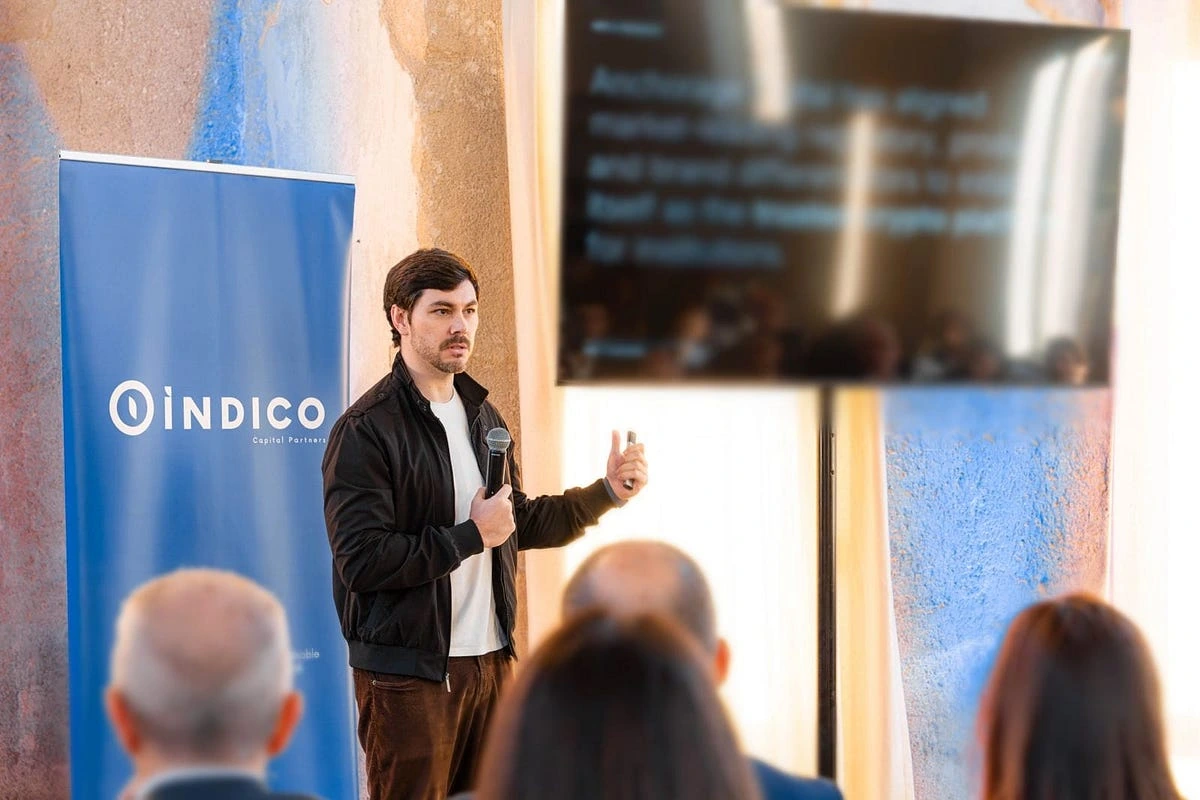
Which Diogo Monica are we talking about?

This is worth clarifying upfront because the name "Diogo" is common in Portuguese-speaking communities, and several notable public figures share similar names. The Diogo Mónica we are covering here (note the accent on the "o") is a Portuguese-American entrepreneur and engineer, born in Portugal, who built his career in the United States in the technology and cybersecurity sectors. He is best known as the co-founder of Anchorage Digital, a crypto-native financial platform he launched alongside Nathan McCauley in 2017.
He is not the same person as Diogo Jota, the Portuguese footballer who plays in the Premier League, nor is he related to Diogo Morgado, the Portuguese actor. If you landed here looking for one of those figures, those links will take you to the right place. For everyone else: Diogo Mónica, the entrepreneur, is the subject of this article, and his wealth story is firmly rooted in Silicon Valley-style startup equity and the broader crypto industry boom.
Why net worth estimates for Diogo Mónica vary so much
If you search around, you will find figures that range from roughly $12 million (older estimates from 2022) to over $20 million (2025 projections). The variance is real and explainable, not just sloppy journalism. A few factors drive this:
- Anchorage Digital is a private company. It has never IPO'd, which means no public share price exists to anchor an equity valuation. Estimates of Diogo's stake rely on funding round disclosures and inferred dilution over time.
- Crypto markets are volatile. The implied value of any equity in a digital-asset custody firm can shift dramatically with market cycles, making any point-in-time estimate partially a function of when it was calculated.
- Aggregator sites like PeopleAI produce algorithmically modeled figures, not verified ones. Their 2025 estimate of $18.2 million is useful as a baseline but should be treated as one data point, not ground truth.
- Career transitions change the picture. His move to Haun Ventures as a general partner in early 2024 adds a new income layer (management fees, carried interest) that earlier estimates could not have accounted for.
- Net worth is always gross-minus-liabilities. We do not have visibility into his personal debt, mortgage obligations, or tax liabilities, all of which reduce the real number.
The honest answer is that no public source has confirmed a precise figure. What we can do is build a reasonable range from the evidence available, state our assumptions clearly, and flag where the uncertainty sits.
Where his money likely comes from

Diogo Mónica's wealth is almost entirely career-driven rather than inherited or lottery-style. His primary income streams fall into a few clear categories.
Anchorage Digital equity
This is the biggest driver. Anchorage Digital was founded in 2017 and became the first federally chartered digital-asset bank in the United States when it received an OCC charter in January 2021. The company has raised multiple funding rounds from top-tier investors including Andreessen Horowitz (a16z) and KKR. Each round typically dilutes early co-founder equity, but a founding stake, even after multiple dilution rounds, in a company of Anchorage's profile represents significant paper wealth. The exact percentage Diogo held or currently holds is not public, but co-founders of comparable Series C/D-stage fintech companies typically retain somewhere between 5% and 15% of the company after dilution, depending on how aggressive fundraising has been. Without a disclosed valuation or liquidity event, this equity is illiquid but still the single largest component of any estimate.
Haun Ventures income
In March 2024, Axios reported that Diogo Mónica joined Haun Ventures (the crypto-focused venture firm founded by Katie Haun) as its second general partner while transitioning to executive chairman at Anchorage. As a GP at a venture fund, he would receive a management fee (typically 2% of assets under management annually) and carried interest (typically 20% of profits on successful investments). Haun Ventures manages funds in the hundreds of millions of dollars range. Even a partial GP economics arrangement adds meaningful annual income on top of any Anchorage compensation.
Prior career income and savings

Before Anchorage, Diogo worked at Docker and in cybersecurity research, which are well-compensated roles in the US tech sector. Senior engineering and security roles in that tier routinely pay $200,000 to $400,000 per year in total compensation including equity. Over a multi-year career before founding Anchorage, this builds a base of liquid savings that contributes to net worth independently of startup equity.
Speaking, advisory, and media appearances
Diogo has appeared on major financial media platforms, including CNBC segments discussing digital assets and Bitcoin going mainstream. High-profile media appearances at his level are rarely paid directly, but they reinforce his advisory market value. Keynote speaking fees for founders of federally chartered crypto banks can range from $10,000 to $50,000 per engagement, and advisory board positions at crypto or fintech startups typically come with equity grants. These are secondary income streams but they compound over time.
Asset categories to factor into the estimate
A proper net worth estimate does not just add up income. It looks at the full balance sheet: what he likely owns, what it is worth, and what debts might offset it.
| Asset Category | Likely Form | Estimated Contribution to Net Worth | Liquidity |
|---|---|---|---|
| Anchorage Digital equity | Private company shares | $10M–$18M (paper value) | Illiquid until exit/IPO |
| Haun Ventures GP interest | Management fees + carried interest | $1M–$3M (ongoing) | Partially liquid annually |
| Cash and liquid savings | Bank accounts, brokerage accounts | $2M–$4M | Fully liquid |
| Real estate | Primary residence (likely San Francisco Bay Area) | $1M–$2M net equity | Semi-liquid |
| Crypto holdings | Personal BTC/ETH or other digital assets | $500K–$2M (speculative) | Liquid but volatile |
| Advisory equity/angel investments | Startup equity stakes | $500K–$1M (estimated) | Illiquid |
Real estate is worth calling out specifically. Diogo has been based in the San Francisco Bay Area, where property prices are among the highest in the world. A primary residence purchased during his Anchorage founding years could carry significant equity by now, though Bay Area real estate values have fluctuated. Without public property records or voluntary disclosure, this remains an estimate anchored by regional averages rather than a confirmed figure.
Building a realistic net worth range
Taking all of the above together, here is how a credible range is constructed. The PeopleAI model produced an estimate of $18.2 million for 2025, built on a trend line that started at $12.7 million in 2022 and grew roughly $1.8 million per year. That growth rate roughly aligns with what you would expect from a combination of salary accumulation, modest asset appreciation, and incremental valuation signals from Anchorage funding activity.
Adjusting that baseline forward to early 2026 and layering in the Haun Ventures GP role (which adds both current income and future upside), a conservative floor of $18 million and an optimistic ceiling of $25 million represents a defensible range. The midpoint, around $20 to $22 million, is where most evidence-based estimates would cluster if pressed for a single working figure.
It is important to be honest about what this range does not capture. If Anchorage Digital goes public or is acquired at a strong valuation, Diogo's net worth could jump significantly above this ceiling in a short period. Conversely, if Anchorage faces regulatory headwinds (the crypto space remains heavily scrutinized in the US) or a crypto bear market depresses the sector, the paper equity value could compress. Net worth estimates for private-company founders are always scenario-dependent in this way.
How to verify and update this estimate yourself
If you want to go deeper or check whether the numbers have moved since this article was written, here is exactly what to look for and where to look.
- Check for Anchorage Digital funding news. Any new funding round or valuation disclosure (via Crunchbase, PitchBook, or press releases) gives you a peg for estimating what a co-founder stake is worth. Search 'Anchorage Digital valuation 2026' for the latest.
- Look for an IPO or acquisition announcement. A liquidity event would immediately convert illiquid equity into real, reportable wealth. This is the single biggest variable in any estimate.
- Track Haun Ventures fund activity. If the firm raises a new fund or announces major portfolio exits, Diogo's GP economics improve. Axios, The Block, and CoinDesk regularly cover Haun Ventures.
- Search property records in San Francisco County or adjacent counties (San Mateo, Santa Clara). In the US, property deeds are public. Sites like Zillow, Redfin, or county assessor portals can surface real estate ownership.
- Watch for financial media appearances. CNBC, Bloomberg, and similar outlets sometimes prompt founders to discuss wealth indirectly when discussing their company's growth. These are qualitative but useful signals.
- Cross-check aggregator sites critically. PeopleAI, Celebrity Net Worth, and similar platforms update periodically. Use them as a starting point, not as a conclusion. Compare at least two to three sources and note whether they cite a methodology.
- Follow his LinkedIn and any public social media. Career changes, board appointments, or advisory roles are often disclosed there first and each adds an income layer to factor in.
One practical note for Portuguese-speaking readers: Diogo Mónica is Portuguese by origin but his financial life is entirely denominated in US dollars. If you are comparing his wealth to Brazilian or Portuguese public figures, the currency context matters. $20 million USD converts to roughly R$100 million Brazilian reais or approximately €18 million euros at current rates (March 2026), which puts him comfortably in the upper tier of wealthy Portuguese-diaspora tech entrepreneurs, though well below the billionaire threshold that some crypto founders have crossed. You can see how this compares to other Portuguese public figures by looking at profiles like Diogo Costa's net worth, which represents a very different wealth-building path through professional football rather than tech entrepreneurship.
The bottom line is straightforward: Diogo Mónica is a genuinely wealthy technology entrepreneur whose net worth is built primarily on private-company equity and venture capital involvement rather than public-facing celebrity income. The $18 million to $25 million range is the most defensible estimate available today, with significant upside potential tied to Anchorage Digital's eventual liquidity event. Anyone tracking this figure should set a news alert for Anchorage Digital and Haun Ventures because those are the two datapoints most likely to move the needle next.
FAQ
Why do estimates for Diogo Mónica’s net worth vary so much year to year?
Because Anchorage Digital is private, most “net worth” numbers depend on assumed ownership percentage and a private-company valuation that is rarely disclosed. Small changes in either assumption (for example, a different dilution estimate or a valuation multiple) can shift the result by several million dollars.
How can I sanity-check whether an estimate is using a realistic ownership percentage for a co-founder?
Look for dilution details across funding rounds and compare with typical co-founder retention ranges for late-stage fintech (often single-digit to low double-digit percentages after multiple rounds). If a source assumes an unusually high stake without explaining round-by-round dilution, it may be overstating net worth.
Does his Haun Ventures role mean his net worth is guaranteed to keep rising each year?
Not guaranteed. GP compensation (management fees) is steadier, but carried interest depends on exits and profit realization. If funds have fewer liquidity events than expected, the carried interest component can lag for years.
Is most of Diogo Mónica’s wealth actually liquid, or is it mostly “paper” value?
Mostly paper value. The largest driver is equity in private companies, which is illiquid until an IPO, acquisition, or structured liquidity program. Even if the valuation rises, cash on hand may not change much without a liquidity event.
What is the biggest thing that could push Diogo Mónica above the $25 million ceiling quickly?
A clear liquidity event for Anchorage Digital at a strong valuation, or a repricing of private valuation assumptions used by major financial models. Since equity is the dominant component, even a single acquisition or IPO pricing can create a step-change in net worth.
What would most likely drag his net worth below the lower end of the range?
Regulatory stress or a sustained crypto market downturn that reduces expected future cash flows and valuation multiples, compressing the value of his holdings. In private companies, downside can come from both sector conditions and company-specific funding or compliance outcomes.
Do executive chairman titles come with guaranteed compensation that materially affects the net worth estimate?
It can, but details usually are not public. Some roles are primarily governance and may include base compensation, stock-based incentives, or none of those depending on negotiation. That’s why net worth estimates should treat public-title announcements as partial signals, not a full income proof.
Why do media appearances not strongly translate into higher net worth numbers?
High-profile appearances often do not provide large direct payouts compared with equity holdings. They can increase credibility and advisory demand, but the personal wealth impact is typically second-order unless combined with disclosed consulting retainers or structured equity grants.
How should I interpret “annual income” when calculating net worth for a private-company founder?
You should separate cash income from changes in asset value. Annual compensation might be meaningful for savings, but net worth swings mainly come from equity valuation changes. A year of high income with flat equity value may not move net worth as much as equity repricing would.
What role does real estate likely play, and how sensitive is the estimate to Bay Area property assumptions?
Real estate can be a notable chunk for tech founders, but it is usually the hardest to verify without records. If an estimate assumes a much higher home equity value than is plausible for the purchase timing and local price cycle, it can inflate net worth. Use broad Bay Area price ranges and consider refinancing or sale timing.
If I want to update the estimate, what specific events should I track?
Track Anchorage Digital’s funding rounds, regulatory milestones that affect valuation, and any signs of liquidity such as IPO rumors or acquisition discussions. For Haun Ventures, track fund announcements and reported realizations, since carried interest depends on exits and realized profits.
Does the currency matter when comparing Diogo Mónica’s wealth to Portuguese or Brazilian public figures?
Yes. His financial life is assumed to be in USD, so translating to euros or reais can change the perceived magnitude due to exchange-rate moves. If you compare using local currencies, use the same time window and be cautious about making exchange-rate-driven conclusions.
Is there a practical way to build my own estimate instead of relying on one model?
Yes, use a three-part model: (1) estimate ownership as a range after dilution, (2) apply a conservative private valuation range for Anchorage, (3) add incremental income sources and subtract estimated debts. The uncertainty usually concentrates in ownership and valuation assumptions, so stress-test those first.
Next Articles

Robert Gouveia Net Worth: How to Estimate It Accurately
Estimate Robert Gouveia net worth: income sources, verified assets, liabilities, ranges, and how to cross-check claims r

Robert Benevides Net Worth: Estimate, Sources, and How to Verify
Estimate of Robert Benevides net worth with evidence sources, assumptions, uncertainties, and a checklist to verify.

Diogo Jota Net Worth: Estimate in USD and INR
Diogo Jota net worth estimate in USD and INR, plus how it’s calculated, why sites differ, and how to verify.