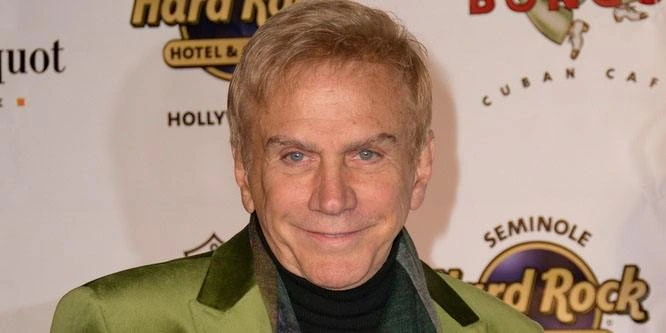
html). He rose to prominence through TikTok (handle: BrandonCardosoo), built an earlier following on Instagram starting with his first post on March 13, 2015, and has also appeared under handles like BrandonCardosox on Twitter and yuppitsbrandon on Snapchat. MN2S’s booking agent/talent roster listing notes Brandon Cardoso’s visibility on TikTok and recognition tied to his @brandoncardosoo account.
This is not a Brazilian sports figure or a Portuguese-language entertainer, though fans from Portuguese-speaking countries do follow him and search for his name in significant numbers, which is partly why he lands on bilingual celebrity databases.
Name mix-ups happen for a few reasons. "Cardoso" is a very common Portuguese and Spanish surname, shared by athletes, musicians, and public figures across Brazil, Portugal, and Latin America. Someone searching for a Brazilian fighter or footballer with the surname Cardoso can land on this entirely different person. For example, Diego Brandao's net worth profile attracts similar cross-language search overlap because "Brandao" and "Brandon" look and sound close enough to create accidental clicks. The short answer: if you searched for Brandon Cardoso the TikTok and social media creator, you are in the right place. If you were looking for someone else who shares the surname, refine your search with a sport, nationality, or profession.
The bottom line: what is Brandon Cardoso worth right now?

As of April 3, 2026, the most credible working estimate puts Brandon Cardoso's net worth somewhere in the range of $1. 3 million to $2 million, with a modest-confidence upper ceiling of around $3 million if his business ventures and music have performed better than publicly visible signals suggest.
The $6 million figure circulated by CelebsMoney is almost certainly inflated: it appears to derive from algorithmic extrapolation of follower counts rather than documented income, and no primary source (tax filing, audited account, or verified contract) backs it up. The $1. 3 million estimate from NetWorthList. org is more conservative and arguably more defensible, though it too relies on estimation rather than direct documentation.
Think of the true figure as probably sitting between those two poles, closer to the lower end.
Where the money comes from
Brandon Cardoso's wealth, whatever the precise total, is built on a small number of overlapping income streams typical for a creator who peaked in the mid-2010s to early 2020s TikTok era. None of them are individually massive, but stacked together they paint a coherent picture.

TikTok's Creator Fund and later its Creativity Program pay creators based on views, but rates are notoriously low: estimates typically run between $0.02 and $0.04 per 1,000 views for the Creator Fund, and somewhat higher under newer programs. A creator with millions of followers but variable posting frequency will not generate consistent high income from the platform itself. The more meaningful money at this follower tier comes from brand deals and sponsorships negotiated directly, where a single sponsored post can range from a few thousand dollars to tens of thousands depending on engagement rate and niche.
Music and streaming
In October 2020, Cardoso released his debut single "I Like That" across streaming platforms. Streaming royalties for a debut single from a social-media personality rather than a signed major-label artist are rarely transformative: Spotify pays between roughly $0.003 and $0.005 per stream, meaning a track needs tens of millions of streams to generate even six figures. There is no publicly available data suggesting "I Like That" reached that threshold. The music career functions more as a brand-building exercise and an additional monetization layer than as a primary wealth driver.
Merchandise and the Brandon Army Apparel brand

Cardoso launched a merchandise line called Brandon Army Apparel, which is a standard move for creators at his follower level. Margin on creator merchandise varies widely depending on whether it is print-on-demand (lower margin, lower risk) or inventory-based (higher margin, higher risk). Without sales figures it is impossible to quantify this precisely, but merchandise from mid-tier creators typically contributes low-to-mid six figures annually during peak demand periods, tapering off over time.
Cameo and paid appearances
Cardoso joined Cameo in February 2020, the platform where fans pay for personalized video messages. His Cameo page shows activity as recently as September 2020, suggesting it was more of an early-pandemic revenue experiment than an ongoing primary income source. At typical Cameo rates for creators at his tier (roughly $25 to $75 per video during that period), this would contribute modest income at best.
Signals that tell us something about his financial position
Direct asset documentation for a creator like Brandon Cardoso is not publicly available: he has not disclosed real estate holdings, investment portfolios, or business filings in any traceable public record. What we can work with are indirect signals. His career trajectory mirrors that of other mid-tier influencers who converted early TikTok followings into modest but real income portfolios. Comparison is useful here: Enaldinho's net worth profile offers a useful reference point for how a Brazilian digital creator of comparable vintage converted social media fame into quantifiable wealth, even though the markets and monetization structures differ.
The key financial milestones in Cardoso's publicly visible career are: sustained Instagram presence from 2015, TikTok growth through 2019-2020, the Cameo launch in early 2020, the music debut in October 2020, and the merchandise line. Each of these represents a monetization layer added incrementally. None signals a sudden wealth event (a major label deal, a startup acquisition, or a viral product launch with documented sales). That pattern supports a net worth in the low millions rather than the high millions.
Why different sites report wildly different numbers
The gap between $1.3 million and $6 million for the same person is jarring, and it reflects a structural problem with how celebrity net worth databases work. Most sites, including CelebsMoney and NetWorthList.org, do not have access to private financial records. Instead, they apply estimation formulas, typically a multiplier applied to estimated social media earnings based on follower count, sometimes combined with assumed brand deal rates and merchandise income guesses. The inputs to those formulas are themselves estimates, and small differences in assumed CPM rates or follower-to-engagement ratios compound quickly into large output differences.
There is also a currency and timeframe problem. Net worth snapshots are taken at different moments, and a figure quoted in 2022 may not have been updated in 2025 even if the page displays "2026" in the title. CelebsAges, for instance, references CelebsMoney as its source rather than conducting independent research, which means the same original estimate propagates across multiple domains and appears to be independently corroborated when it is actually just one source echoed.
This is worth keeping in mind when evaluating any celebrity financial data, whether for a U. S. creator like Cardoso or for Brazilian football figures. For context on how net worth estimation works for someone with a more documented career, the methodology used on profiles like Edson Arantes do Nascimento's wealth documentation illustrates what a well-evidenced estimate looks like compared to a purely algorithmic one.
It is also important not to confuse gross earnings with net worth. A creator who earns $500,000 in a year from brand deals is not worth $500,000 more at year end: taxes, platform fees, manager and agent commissions (typically 15-20%), production costs, and personal expenses all reduce the actual wealth accumulation. Net worth databases frequently conflate annual earnings estimates with cumulative wealth, which inflates the figure significantly.
How the estimates compare at a glance
| Source | Estimate | Methodology Stated | Primary Source Cited |
|---|
| CelebsMoney | $6 million | Online estimates / algorithmic | No |
| NetWorthList.org | $1.3 million | Social media estimation | No |
| CelebsAges | References CelebsMoney | Aggregation / echo | No |
| This article's working estimate | $1.3M – $2M (low-mid confidence) | Cross-referenced signals | Partially |
How to verify this yourself
If you want to pressure-test any net worth figure you find online, the process is straightforward even when perfect data does not exist. Here is a practical checklist:
- Check whether the site cites a primary source (a court filing, a disclosed contract, an interview where the subject states their own earnings). If there is no primary source, treat the number as an estimate only.
- Look for the methodology note. A responsible estimate will explain what was included: platform earnings, endorsements, merchandise, music, appearances. If a site just posts a number with a birth year and a photo, the number is likely algorithmic.
- Cross-reference at least three independent sources and check whether they all trace back to the same origin. If three sites all cite the same $6 million figure and one of them is just repeating CelebsMoney, you have one source, not three.
- Check the publication or update date. A 2022 estimate labeled '2026' on a site's URL or title tag is not a 2026 estimate; it is stale data with an SEO-optimized headline.
- Search for the creator's own statements. Interviews, YouTube videos, podcasts, or social posts where a creator discusses business or earnings are more reliable than third-party databases.
- Watch for red flags: round numbers with no range (exactly $6 million, not $5.8-6.2 million), identical figures across dozens of sites, and language like 'according to online sources' without naming those sources.
For social media creators specifically, you can also do a rough back-of-envelope check. Estimate their brand deal income by looking at sponsored post frequency and applying industry-standard rates for their follower tier. Add a conservative merchandise estimate if they have an active store. Cross that with estimated platform payouts using publicly known rate ranges. The result will not be exact, but it gives you a plausibility check against what a database is claiming. This kind of methodology is more rigorous than what most net worth sites apply, and it is the same logic used to evaluate figures like Ederson Moraes's estimated net worth, where sports contract data provides an anchor that social media income alone cannot.
What could change his net worth from here
Brandon Cardoso's net worth trajectory from 2026 onward depends on a handful of variables. The social media landscape has shifted considerably since his peak TikTok growth years: the platform's Creator program rates have changed, competition for brand deals has intensified, and creator lifespans in entertainment tend to be short unless there is a deliberate pivot into more durable income (music with label backing, acting, entrepreneurship, or investment). For context on how Brazilian and Portuguese-language digital personalities navigate similar pivot moments, the career arc documented in Edson Brandao's net worth profile is a useful comparison.
On the upside, a successful music release or a brand partnership with a major consumer company could meaningfully lift his earnings in a single year. A product line that gains independent retail traction would be the most durable wealth builder. On the downside, platform algorithm changes, reduced posting frequency, or failure to transition his audience to newer platforms could compress income significantly. There is also the question of investment: creators who have allocated early earnings into diversified assets (index funds, real estate, or equity stakes in businesses) compound their wealth quietly, while those who did not are more exposed to the volatile nature of social media income.
Two other scenarios worth watching: a comeback viral moment that re-energizes brand deal interest, which is not uncommon for creators in their mid-twenties who still have an engaged base, and any foray into acting or mainstream entertainment, which tends to open income streams unavailable through social media alone. Athletes and fighters who cross over into entertainment often see similar step-changes. The pattern is comparable to what Erenilton Morais's financial profile reflects when a sports career branches into broader public visibility.
The bottom line for now: treat $1.3 million to $2 million as the most defensible range for Brandon Cardoso's net worth today, hold the $6 million figure with significant skepticism, and keep an eye on whether his music or merchandise businesses produce any documented breakout. If they do, the upper end of the range becomes more credible. If activity stays quiet across his channels, the figure is unlikely to move much in either direction in the near term.